
Electric Water Heater Replacement in Bend, OR
Steady Hot Water From a Unit Sized for Your Household
An electric water heater rarely fails politely. It leaks onto a garage floor, trips a breaker at 6 a.m. on a busy weekday, or simply stops recovering between showers. Stark Plumbing replaces electric tanks for homes and small businesses across Bend, OR, and throughout Sunriver, Redmond, and Sisters, matching capacity to genuine household demand rather than to whatever size happened to be sitting there before.
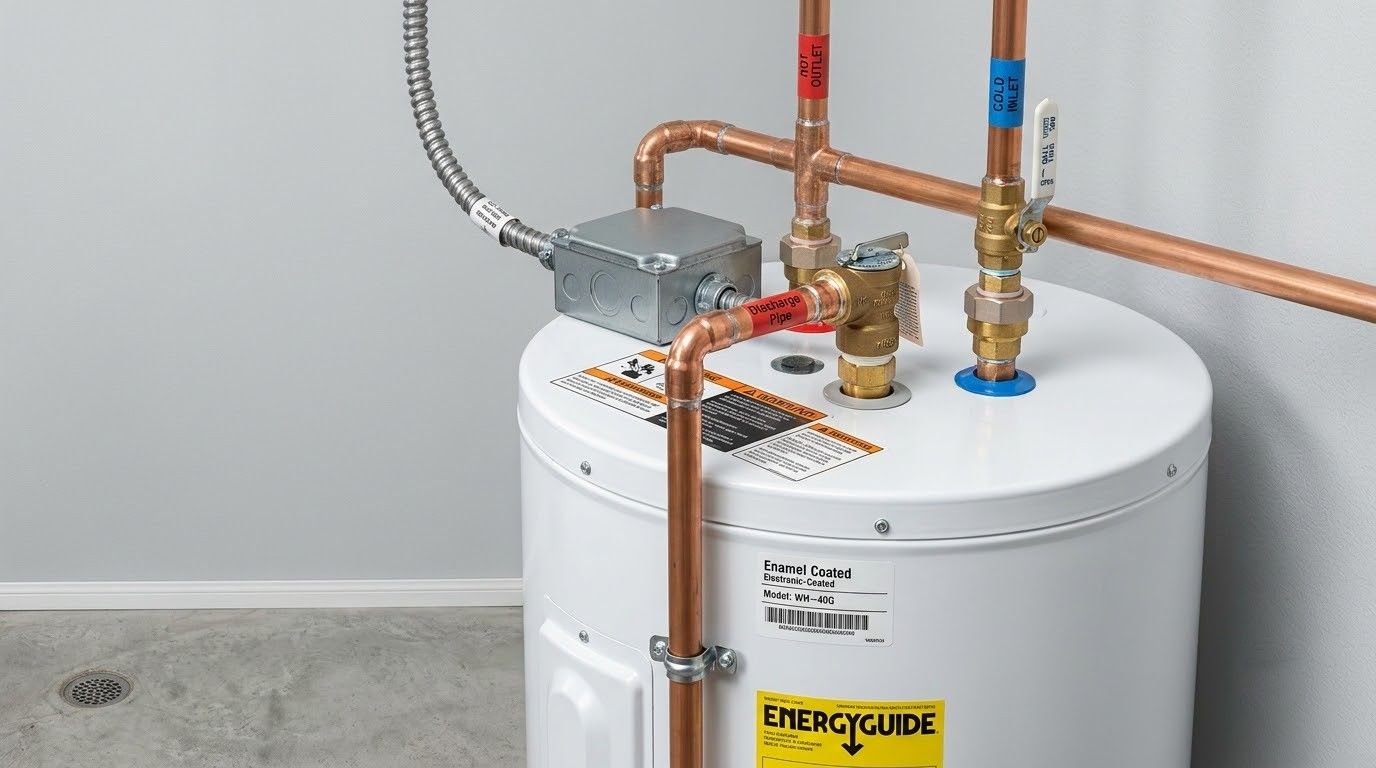
Every replacement includes a proper look at the connections, the expansion tank, the seismic strapping, and the drain pan, because a new heater on old fittings is only half a job. Our licensed and insured plumbers carry 28+ years of local experience and work under Oregon CCB #222421. Financing is available, and offsite estimates for a standard tank replacement can often be prepared from photos you send us. Reach out through our contact page to get the replacement scheduled around your week.
Electric Water Heaters We Replace
Standard Electric Tank Replacement
Old unit out, new unit in, with fresh flex connectors, a serviceable shutoff, and a drain pan routed somewhere useful. We confirm the electrical supply matches the new element rating and test recovery before signing off on the work.
Heat Pump Water Heater Installation
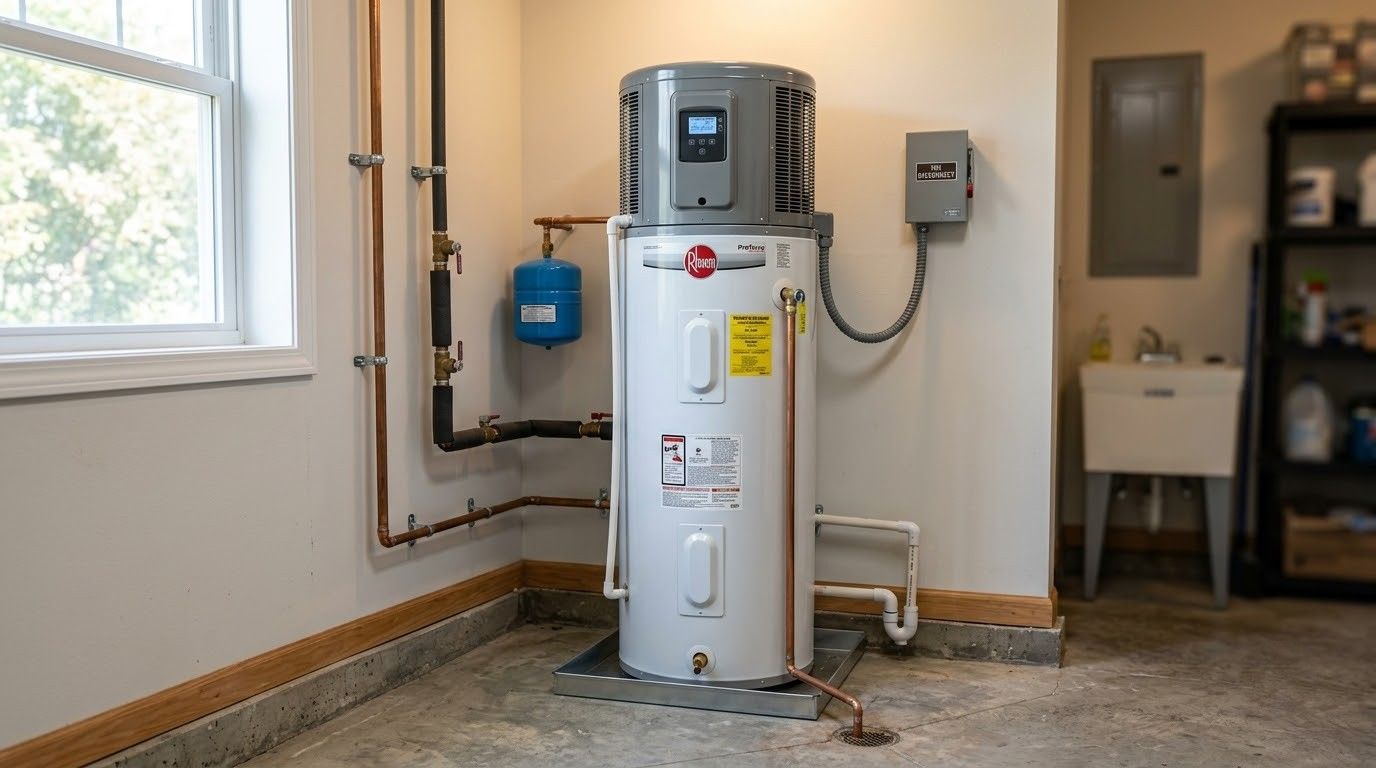
These units pull heat from surrounding air and use a fraction of the electricity a standard element demands. Placement matters, so we check air volume, ambient temperature, and condensate routing before recommending one for a garage or utility space.
Capacity Sizing and Load Review
Bigger is not automatically better, and undersized is a daily annoyance. We look at bathroom count, peak usage patterns, and recovery expectations, then recommend a capacity that keeps up without paying to heat gallons that nobody in the house ever uses.
Expansion Tank and Valve Updates
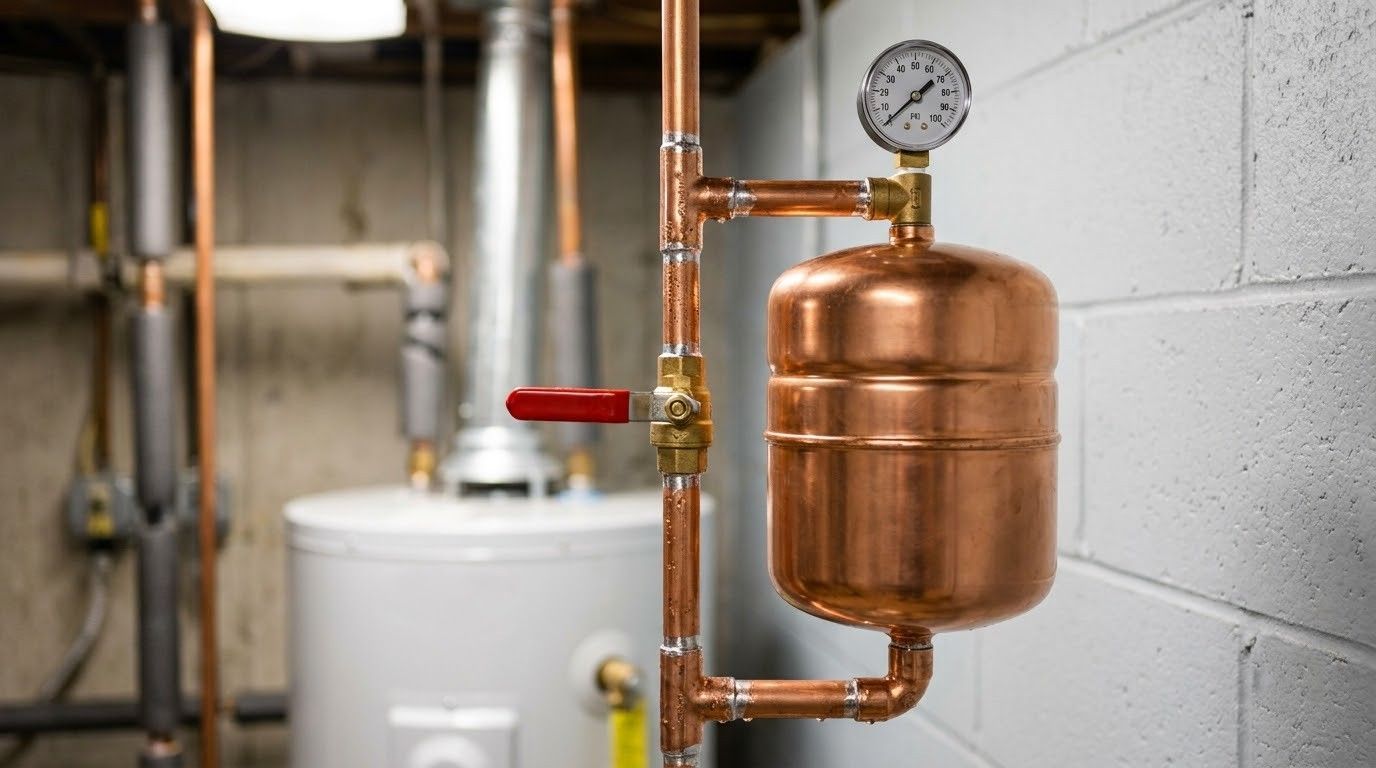
Closed plumbing systems need somewhere for heated water to expand. A correctly charged expansion tank, a tested relief valve, and a properly piped discharge line protect both the heater and every fixture connected downstream of it from pressure damage.
Old Unit Removal and Disposal
The heavy, half-full tank leaves with our crew rather than sitting in your garage for a month. We drain it carefully, protect flooring on the way out, and handle recycling so nothing lingers on your property afterward.
Element, Thermostat and Anode Service
Not every problem calls for replacement. Burned elements, failed thermostats, and a spent anode rod are all serviceable, and addressing them at the right moment can add several more years to a tank that is otherwise structurally sound.
How Replacement Restores Reliable Hot Water
Reliable Hot Water Recovery
Morning routines stop depending on who showers first. A correctly sized new tank reheats at a predictable rate, so back-to-back use no longer ends with someone rinsing shampoo out under water that has gone stubbornly cold.
Lower Standby Energy Loss
Modern insulation holds heat dramatically better than a tank built 12 or 15 years ago. Less energy leaks through the jacket while nobody is using hot water, and that difference shows up quietly on every monthly statement you receive.
Code Compliant Connections
New installations bring wiring, bonding, seismic strapping, relief valve piping, and drain pans up to current requirements. That matters for safety today and for the inspection report whenever the property changes hands, which is rarely a convenient moment for surprises.
Reduced Leak Risk
Corrosion works from the inside out, so a tank usually looks fine right up until the floor is wet. Replacing before failure protects drywall, flooring, and anything stored near the unit from a soaking that was completely avoidable with better timing.
Quieter Daily Operation
Sediment crackle and popping noises disappear along with the old tank. A clean interior heats evenly, runs quietly, and finally stops broadcasting its condition to the rest of the house every single time the elements cycle on again.
Straightforward Warranty Coverage
A professionally installed unit keeps its manufacturer warranty intact, and our workmanship stands behind the installation itself. If something does go wrong, the coverage question already has a clear answer instead of turning into a frustrating argument between suppliers.
Upgrade to Consistent Everyday Hot Water
A water heater earns its keep by being boring. It fills the tub, handles the dishes, gets everyone through a busy morning, and asks for nothing beyond an annual flush. That is the standard we install to on every replacement across Bend, OR, from the sizing calculation through the final connections and the disposal of the old unit. Stark Plumbing would rather right-size a tank once than sell you capacity you will never use. When yours is showing its age or has already given up, send us the details through our contact page and we will take it from there.
Frequently Asked Questions
How long does an electric water heater last?
Most units deliver 10 to 15 years of service, with water quality and maintenance driving the difference. Annual flushing and periodic anode inspection push a tank toward the upper end of that range instead of toward the lower one.
How long does it take to replace an electric water heater?
A straight swap usually takes two to three hours once the old tank drains. Changing size, relocating the unit, or updating electrical and venting adds time, and we tell you which category your job falls into before we start.
What size electric water heater do I need for my family?
A rough guide is 40 gallons for two people, 50 for three or four, and 66 or more beyond that. Peak demand matters more than headcount, so Stark Plumbing asks about morning routines in every Bend, OR home.
Is a heat pump water heater better than a standard electric one?
It uses far less electricity than standard elements, which pays back over time. It needs adequate air volume, moderate ambient temperature, and a condensate drain, so a cramped interior closet is usually the wrong home for one of them.
Why does my electric water heater keep tripping the breaker?
A shorted heating element, a failed thermostat, wiring that has loosened at the terminals, or a breaker sized incorrectly all produce that symptom. Testing the elements and connections identifies the actual cause quickly and safely, before anything gets replaced.
Do electric water heaters need an expansion tank?
If the system has a check valve, backflow preventer, or pressure regulator, then yes. Without somewhere for heated water to expand, pressure builds against the relief valve and shortens the life of fixtures and appliances throughout the entire property.
Can I replace an electric water heater with a gas one?
Sometimes, though it means adding a gas line, venting, and combustion air, which changes the scope considerably. Stark Plumbing evaluates whether that conversion makes financial sense for your property in Bend, OR before recommending a change in either direction.
What is the ideal temperature setting for a water heater?
Roughly 120 degrees balances comfort, energy use, and scald safety for most households here. Higher settings raise the burn risk and the energy cost, while settings much lower than that can allow bacteria to grow inside the tank itself.
What our customers have to say...
Testimonials